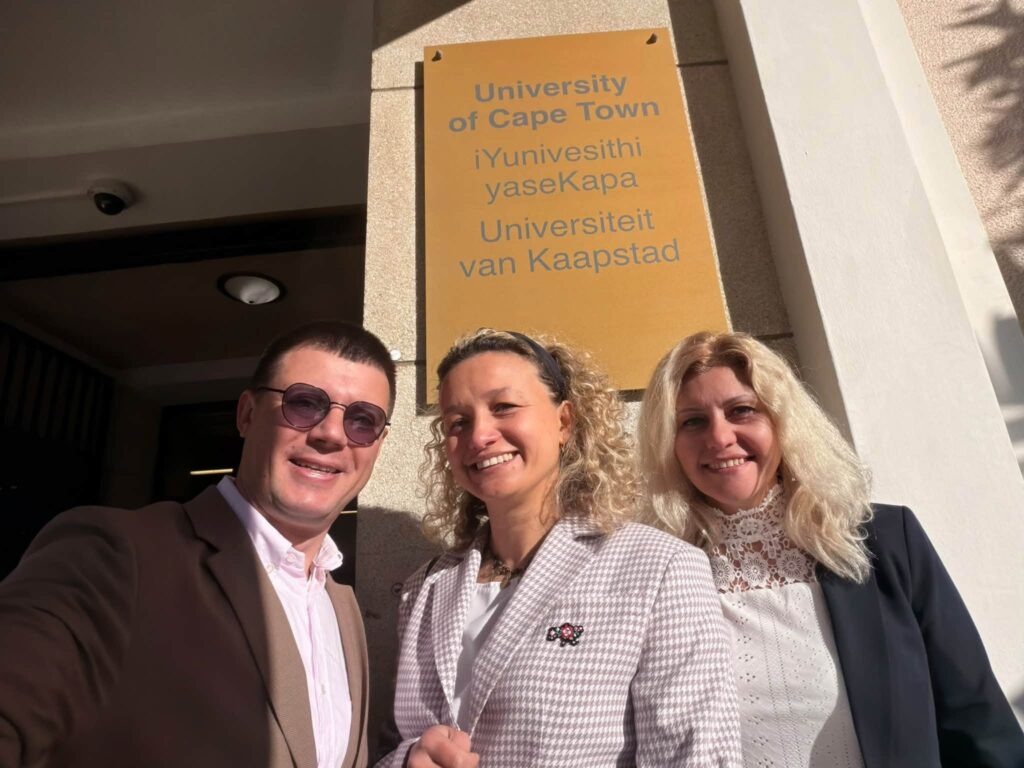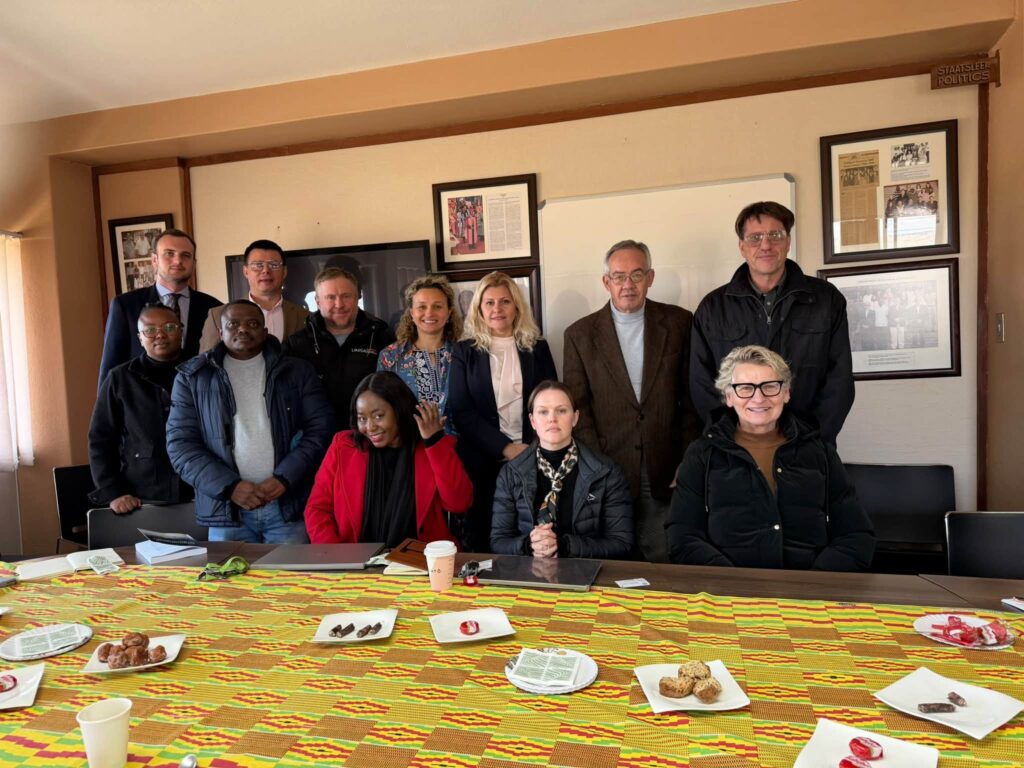
🇺🇦🇿🇦 During his visit to South Africa, Maksym Yakovlyev, Director of the School for Policy Analysis NaUKMA and Dean of Faculty of International Relations and Governance, together with Oksana Pyatkovska, representing the International Institute of Education, Culture and Diaspora Relations (MIOK) at Lviv Polytechnic National University, held a series of meetings with representatives of leading South African universities.
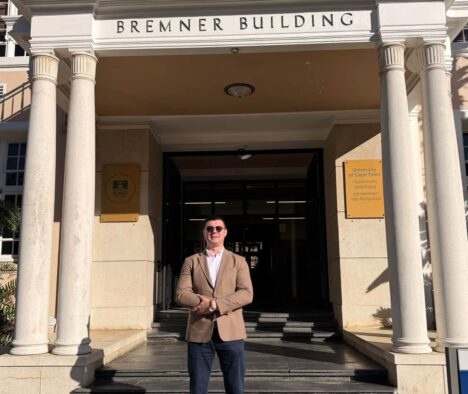
At the University of Cape Town (UCT) they discussed opportunities for joint research, academic exchanges, and institutional cooperation between Ukrainian and South African universities.
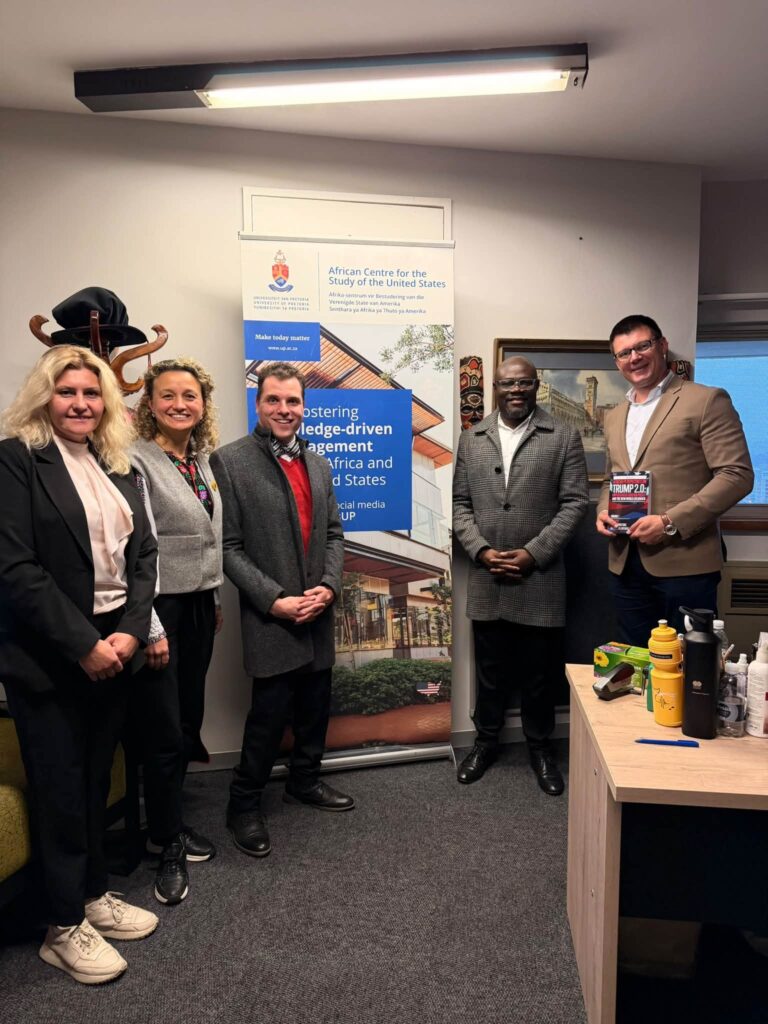
At the University of Pretoria (UP) the discussions focused on developing two-way academic cooperation between Ukraine and South Africa, including strengthening Ukrainian Studies in South Africa and developing African Studies in Ukraine. During the visit, Maksym Yakovlyev also delivered a lecture titled “Ukraine as a Middle Power”.
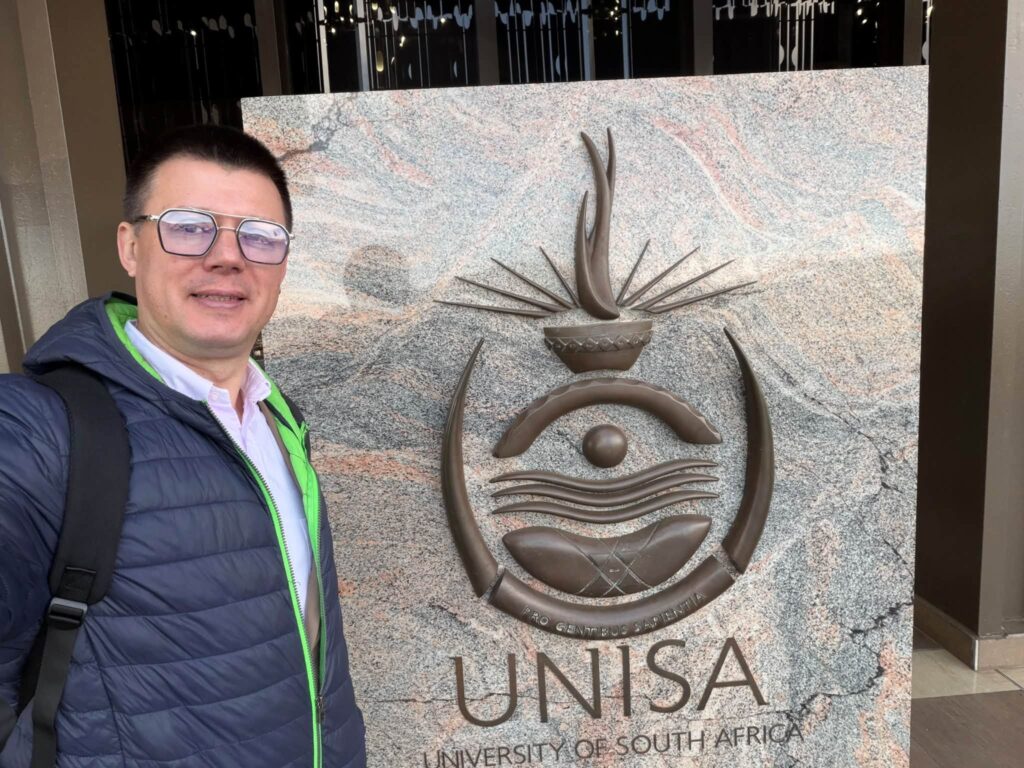
At the University of South Africa (UNISA), they discussed opportunities for new research and educational partnerships. UNISA is one of the largest universities on the African continent, with almost 4000 thousand of students. The meeting has already generated initial ideas for further cooperation.
Reflecting on the meetings, Maksym Yakovlyev noted that there is still limited knowledge about Ukraine in South Africa, while interest in the country is strong:
“People want to understand Ukraine better, see significant potential for cooperation between universities in our countries, and our South African colleagues are ready to visit Ukraine and explore opportunities for joint projects.”
We hope these meetings will mark the beginning of new projects between Ukraine and South Africa.
The meetings took place as part of a project coordinated by Dzvinka Kachur. We are grateful to Dzvinka for creating opportunities for this kind of academic dialogue and for developing new partnerships.
The project is part of the Lysiak-Rudnytsky Ukrainian Studies Programme, held by the Ukrainian Institute and The Cultural Diplomacy Foundation, with financial support from the International Renaissance Foundation and the Mnozhyna Foundation.